

How to Organize a Work Desk That Works
A messy desk usually doesn’t happen all at once. It starts with one receipt, one charger, two pens, a sticky note you swear you still need, and suddenly your coffee mug is fighting for elbow room. If you’ve been wondering how to organize a work desk without turning it into a sterile, boring box, the good news is this: you do not need a huge office or a big budget to make your space feel better fast.
The best desk setups are not the ones that look perfect for five minutes in a catalog. They’re the ones that make your workday easier. That means less reaching, less shuffling piles around, and less time looking for the one thing you need right now.
How to organize a work desk by starting with what you actually use
Before you buy a single organizer, clear the surface completely. Yes, completely. It is much easier to build a desk with intention when you can see the whole space. Put everything on the floor, on a nearby table, or in a box, then sort it honestly.
Keep only what belongs at your desk and what you use often enough to deserve a spot there. Daily items might include your laptop, notebook, favorite pens, charger, planner, and a small lamp. Weekly items can stay nearby but not front and center. Rarely used items should move to a drawer, shelf, or another room.
This is the part many people skip, and it’s why new organizers end up holding old clutter. A cute tray can help, but it cannot fix a desk that is trying to store your entire life.
Set up zones so your desk works with you
Once you know what stays, divide your desk into simple zones. You do not need labels for everything, but you do need a little logic.
Your primary work zone is the center. This is where your keyboard, laptop, or writing space should live. Keep this area as open as possible because it is where the real work happens. If you write by hand often, leave enough room for your notebook without bumping into a cup full of markers.
Your support zone should sit on your dominant side. If you’re right-handed, place pens, sticky notes, scissors, and your planner on the right. If you’re left-handed, flip it. This sounds small, but it cuts down on constant reaching and makes the desk feel smoother to use.
Your storage zone belongs off to the side or slightly behind your main work area. This is a good place for trays, mini drawers, file holders, or a pen cup. Keep it close enough to access, but far enough that it doesn’t crowd the center.
If you use your desk for more than one thing, create a flexible zone too. Maybe that’s a spot for your tablet, your headphones, or a small stand for video calls. The trick is keeping multi-use from turning into messy-use.
The fastest way to organize paper, pens, and small desk clutter
Small items create most of the visual mess. They spread out fast, and when everything is loose, your desk starts to look busy even if you don’t have that much stuff.
Paper should be the first thing you control. Give every sheet a purpose: act on it, file it, or toss it. That’s it. A simple upright file holder or two slim trays can keep incoming papers from covering your workspace. One tray for now and one for later is often enough for most people.
Pens are another desk magnet. Keep a small selection within reach and store the extras elsewhere. If your pen cup looks like a clearance bin, edit it down. A few reliable favorites are easier to use than twenty random pens, half of which are dried out.
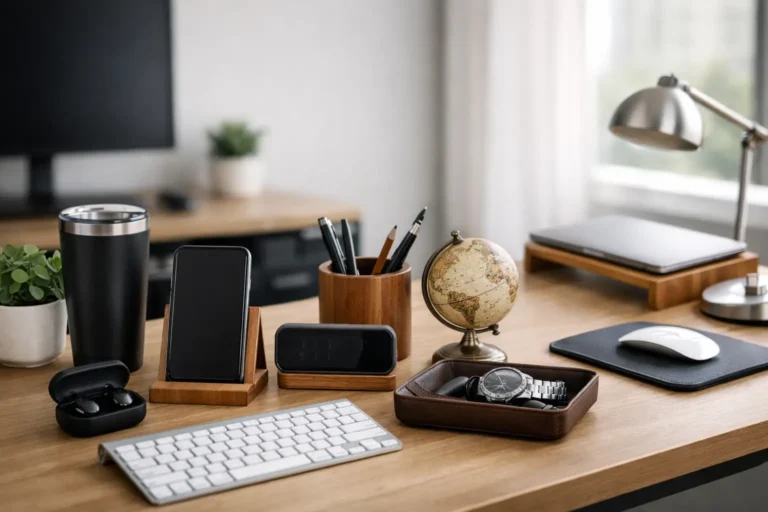
Sticky notes, paper clips, stamps, chargers, and other little essentials need boundaries. Trays, drawer inserts, and small containers make a big difference because they stop the spread. This is where affordable desk accessories really earn their spot. You don’t need anything fancy. You just need pieces that keep useful things visible without letting them take over.
A mix of practical and fun works well here. If a cute organizer makes you more likely to put things away, that counts as functional too.
How to organize a work desk when space is tight
A small desk can still feel calm if you use height and layers instead of only surface area. A monitor stand, compact shelf, or stacked organizer can open up room underneath for notebooks, your keyboard, or supplies. Vertical storage is your friend when square inches are limited.
Choose accessories that do more than one job. A phone stand can hold your device while keeping it off the desktop. A drawer organizer can separate office tools from tech accessories. A storage box can hold supplies and make the desk look cleaner at the same time.
This is also where restraint matters. If your desk is tiny, even helpful items can become clutter if there are too many of them. Pick a few pieces that solve your biggest problems first, then stop. More storage is not always better if it fills the space with containers instead of room to work.
Cables can ruin a clean desk in five minutes
You can have the neatest setup in the world, but if cords are hanging everywhere, the desk still feels chaotic. Start by figuring out which cables truly need to stay plugged in every day. Keep those accessible and gather the rest.
Use clips, ties, or a small cable holder to guide cords along the edge or back of the desk. If you charge multiple devices, try keeping one dedicated charging area instead of letting each cable wander across the surface. Even this one change makes a desk look more organized almost instantly.
If you work from a laptop, think about your unplugging routine too. The easiest systems are the ones that make setup and cleanup simple. One charging spot, one place for earbuds, one home for your portable mouse. Less hunting, less tangling, less annoyance.
Make it look good, but don’t decorate past the point of useful
A desk should feel nice to sit down at. That matters. If your workspace looks flat, cluttered, or dull, you’ll probably enjoy using it less. Adding personality can help you stay motivated, especially if you work or study at the same desk every day.
The key is editing. Pick one or two decorative touches that make the space feel like yours. Maybe that’s a color-coordinated pen set, a small plant, a neat washi tape dispenser, or a stylish notepad. Keep the vibe cheerful, but keep the surface functional.
There’s a trade-off here. More personality can make a desk feel warm and inviting, but too many decorative items create more dust, more visual noise, and fewer clear work areas. If your desk is constantly full, decor should probably be the last layer, not the first.
Build a reset routine you can actually stick to
The secret to a neat desk is not one perfect organizing session. It’s a reset you can repeat without thinking too hard about it.
At the end of the day, take two minutes to return everything to its home. Toss trash, stack loose papers, put pens back, plug devices into their charging spot, and clear the center of the desk. That’s enough. You do not need a dramatic Sunday overhaul every week if you stop the mess from building in the first place.
If you tend to collect clutter during busy stretches, give yourself one catch-all tray instead of pretending every item will get put away immediately. This works especially well for people with fast-paced days. The tray contains the mess, and you can sort it later without letting it spread across your whole desk.
What to buy and what to skip
If you’re shopping for desk organization, start with items that solve a real annoyance. A pen holder, tray, drawer organizer, file stand, cable clip, or phone stand can all earn their place quickly. Choose pieces that are compact, easy to clean, and pleasant to look at. Affordable upgrades are often the smartest ones because they improve your routine without making you overthink every purchase.
Skip anything that is too bulky for your space, too specific for items you barely use, or so decorative that it gets in the way. A pretty desk is great. A pretty desk you can’t work at is not.
If you like your setup to feel a little more fun, that helps too. Jellypenny-style desk accessories, stationery, and small organizers are a good reminder that useful does not have to mean boring.
A well-organized desk is really just a series of small decisions that make your day easier. Start with the things you reach for most, give everything a place, and leave enough open space to think. When your desk stops asking for attention, you get more of your attention back.
15 Best Gifts for Students That They’ll Use
How to Organize Sticky Notes Without the Mess
Read more..

Leave a comment