

How to Pick a Travel Wallet for Documents
That airport moment when you are juggling a passport, boarding pass, ID, and a customs form is exactly why a good travel wallet for documents earns its spot in your bag. It is not just about looking organized. It is about getting through check-in, security, and arrivals with less stress, fewer loose papers, and way less digging around at the worst possible time.
The tricky part is that not every travel wallet is actually helpful. Some are too bulky to carry comfortably. Some have plenty of card slots but barely enough room for the documents that matter. Others look cute online, then turn into a floppy catch-all after one trip. The best choice depends on how you travel, what you carry, and whether you want something slim and simple or a full organizer that keeps the whole trip in one place.
What a travel wallet for documents should actually do
At the most basic level, a travel wallet should keep your essentials together and easy to reach. For most travelers, that means your passport, ID, payment cards, a little cash, boarding passes, reservation printouts, and maybe a pen. If you are traveling with kids, it often means much more than that.
A useful wallet creates order without slowing you down. You should be able to open it quickly, spot what you need right away, and put things back without fighting zippers, snaps, or overstuffed pockets. If it takes two hands and a table to use properly, it may not be the best fit for airport lines or train platforms.
There is also a big difference between a wallet that holds documents and one that protects them. If your papers tend to get bent, wrinkled, or buried in your tote, look for a structured design. If your main goal is speed and convenience, a softer, lighter option may be enough.
Size matters more than people think
A lot of shoppers focus on color or number of compartments first, but size is usually what makes or breaks the experience. A travel wallet for documents needs to fit the items you carry most often, but it should also fit the bag you actually travel with.
If you usually travel with a small crossbody or compact backpack, a large organizer can become annoying fast. It might hold everything beautifully, but if it barely fits in your bag, you will end up carrying it in your hand or leaving it behind when you need it most. On the other hand, if you travel with a roomy tote or carry-on and like having every paper in one place, a larger wallet can feel much more efficient.
Families and frequent international travelers often benefit from a bigger format because they are carrying multiple passports, printed confirmations, and backup cards. Solo travelers on short trips usually do better with a slim design that focuses on the basics. Neither is better across the board. It depends on your routine.
Slim vs full-size organizers
Slim wallets are easier to carry, lighter in your bag, and great for travelers who keep things digital. If your airline pass is on your phone and your hotel details are easy to pull up, you may only need room for a passport, one or two cards, and some cash.
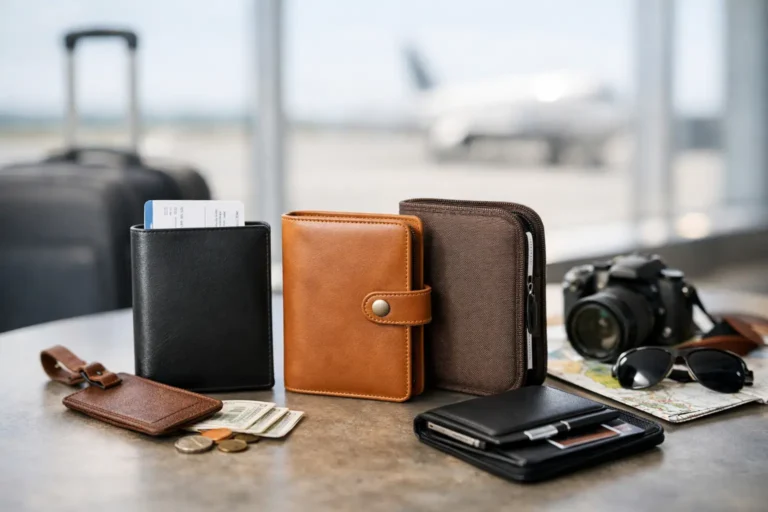
Full-size organizers are better if you like paper backups, need extra sections, or want everything in a single place. They are especially handy for longer trips, international travel, and family travel. The trade-off is bulk. A wallet that carries everything can also feel like one more item to manage.
The right compartments save time
Storage layout is where a wallet goes from decent to genuinely useful. More compartments are not always better. What matters is whether the compartments match real travel needs.
A passport pocket should be easy to access without your passport slipping out. Card slots should hold your essentials without forcing you to stack cards awkwardly. A cash section should fit bills flat, especially if you carry multiple currencies. If you still print boarding passes or itineraries, a document sleeve that keeps papers smooth is worth having.
A zip pocket can be especially helpful for small items that love to disappear, like SIM cards, coins, luggage locker keys, or receipts. A pen loop sounds minor until you are handed an arrival form and realize no one around you has a pen. Little details like that can make a wallet feel much more travel-ready.
Security features are useful, but not magic
Security matters, especially in crowded airports, tourist areas, and public transportation. Still, it helps to be realistic about what a wallet can and cannot do.
A zip-around closure is often better than an open folio if you tend to move quickly or pack your bag tightly. It helps keep papers from slipping out and gives the wallet a more secure feel. RFID-blocking features can add peace of mind for some travelers, though they are not the only thing that keeps your information safe. Good travel habits still matter more than any label on the product.
A wrist strap can be convenient when you need quick access, but it is not ideal for every trip. If you like carrying your documents in hand while boarding, it can help. If you prefer everything tucked away inside a larger bag, it may be unnecessary. External pockets are another feature that sounds handy, but if they are too open, they can be risky for storing anything important.
Material affects both style and performance
Travel gear gets handled a lot. It gets zipped, packed, dropped, and occasionally stuffed under a plane seat with far less care than it deserves. That is why material matters.
A travel wallet made from lightweight synthetic material can be practical, affordable, and easy to wipe clean. That makes sense for frequent use and everyday value. Faux leather or structured finishes can look more polished and giftable, which is great if you want something that feels a little elevated without being expensive. Fabric wallets can be soft and flexible, though they may show wear faster depending on the finish.
This is also where personal style comes in. Some travelers want something sleek and neutral that blends into any bag. Others want a fun color or cute print that is easy to spot at a glance. There is room for both. If a wallet makes you happy to use and still does the job well, that is a solid buy.
When a travel wallet for documents is worth it
Not everyone needs a dedicated travel wallet. If you travel once a year, carry almost everything digitally, and prefer to keep your passport in your everyday bag, a separate organizer may feel like extra stuff.
But if you have ever held up a line while searching for one missing paper, you will probably appreciate having one. The same goes if you travel with family, switch between multiple cards and currencies, or simply like knowing exactly where everything is. A good wallet turns scattered travel essentials into one grab-and-go item.
It is also a smart pick for gift shopping. Travel accessories hit a nice sweet spot – practical enough to use, affordable enough to buy without overthinking, and polished enough to feel thoughtful. For students studying abroad, newlyweds planning a honeymoon, or anyone with a trip coming up, it is one of those gifts that tends to get real use.
How to choose without overbuying
The easiest mistake is buying for an ideal version of your travel life instead of your actual one. If you never carry printed papers, do not choose a bulky organizer just because it has lots of sleeves. If you always travel with kids, do not settle for a tiny wallet that only fits one passport.
Start with your must-carry items. Think passport, cards, cash, and any paper documents you typically keep on hand. Then consider where the wallet will live – coat pocket, tote, backpack, or carry-on. Finally, think about your pace. If you move fast and like grab-and-go convenience, keep it simple. If you prefer every detail neatly arranged, go for more structure.
Price matters too. Travel accessories should feel useful, not precious. You want a wallet that looks good and works hard without feeling too expensive to actually use. That is why affordable, functional options often make the most sense. Stores like Jellypenny appeal to shoppers who want exactly that balance – cute, practical, and easy on the budget.
Small details that make a big difference
There are a few features people do not think about until they need them. A smooth zipper matters if you open the wallet often. A contrasting lining can make contents easier to see. A slightly structured shape helps papers stay neat. Even the way the wallet opens can change how comfortable it feels to use while standing in line.
If possible, picture yourself using it in real travel moments, not just laying it flat on a desk. Can you grab your passport quickly? Can you spot the right card without fumbling? Can it slide into your personal item without becoming a brick? Those are the details that separate a wallet that looks nice from one that earns repeat use.
The right travel wallet does not need to be complicated. It just needs to fit your trip, your habits, and your bag. Pick one that keeps your documents easy to find, secure enough for the way you travel, and simple enough that you will actually want to bring it every time.
How to Organize Sticky Notes Without the Mess
12 Giftable Office Accessories People Use
Read more..
Leave a comment